PERPUSTAKAAN SEKOLAH TINGGI ILMU KESEHATAN SAMARINDA
REPOSITORY
Select Language
Simple Search
Advanced Search
License
This Software is Released Under GNU GPL License Version 3.
indexed

Visitors
Statistic
Total Collection:
KTI-2005 (9)
KTI-2006 (20)
KTI-2007 (4)
KTI-2008 (2)
KTI-2009 (46)
KTI-2010 (54)
KTI-2011 (4)
KTI-2012 (6)
KTI-2013 (5)
KTI-2014 (69)
KTI-2015 (59)
KTI-2016 (102)
KTI-2017 (108)
PROSIDING (9)
PENELITIAN DOSEN (4)
LAPORAN PKL (0)
KTI-2004 (12)
KTI-2018 (175)
JURNAL (4)
KTI 2019 (193)
KTI 2020 (176)
KTI - 2021 (62)
Jurnal Farmasi UNAIR (23)
Jurnal Farmasi UnPad (25)
Skripsi 2021 (27)
Media_Farmasi (19)
Jurnal_UGM (40)
JFI_Jurnal Farmasi (21)
JIFI_Univ Pancasila (20)
KTI - 2022 (27)
SKRIPSI 2022 (14)
SKRIPSI 2023 (67)
KTI - 2023 (20)
KTI - 2024 (64)
SKRIPSI 2024 (89)
Jurnal Ibnu Sina (6)
Amerta Nutrition (21)
SKRIPSI 2025 (92)
KTI-2025 (66)
The American Journal (10)
Asian Journal (18)
European Journal (17)
Saudi Pharmaceutical (18)
| Title | International Journal of Pharmaceutics 15 December 2023 |
| Edition | 15 December 2023 |
| Call Number | |
| ISBN/ISSN | |
| Author(s) | |
| Subject(s) | Biotherapeutic formulations Biologicals Surfactants |
| Classification | |
| Series Title | GMD | Jurnal |
| Language | Indonesia |
| Publisher | Cairo University |
| Publishing Year | 2023 |
| Publishing Place | Mesir |
| Collation | |
| Abstract/Notes | ABSTRACT To ensure the stability of biologicals over their entire shelf-life, non-ionic surface-active compounds (surfactants) are added to protect biologics from denaturation and particle formation. In this context, polysorbate 20 and 80 are the most used detergents. Despite their benefits of low toxicity and high biocompatibility, specific factors are influencing the intrinsic stability of polysorbates, leading to degradation, loss in efficacy, or even particle for- mation. Polysorbate degradation can be categorized into chemical or enzymatic hydrolysis and oxidation. Under pharmaceutical relevant conditions, hydrolysis is commonly originated from host cell proteins, whereas oxida- tive degradation may be caused by multiple factors such as light, presence of residual metal traces, peroxides, or temperature, which can be introduced upon manufacturing or could be already present in the raw materials. In this review, we provide an overview of the current knowledge on polysorbates with a focus on oxidative degradation. Subsequently, degradation products and key characteristics of oxidative-mediated polysorbate degradation in respect of different types and grades are summarized, followed by an extensive comparison be- tween polysorbate 20 and 80. A better understanding of the radical-induced oxidative PS degradation pathway could support specific mitigation strategies. Finally, buffer conditions, various stressors, as well as appropriate mitigation strategies, reagents, and alternative stabilizers are discussed. Prior manufacturing, careful consider- ation and a meticulous risk-benefit analysis are highly recommended in terms of polysorbate qualities, buffers, storage conditions, as well as mitigation strategies. |
| Specific Detail Info | |
| Image | 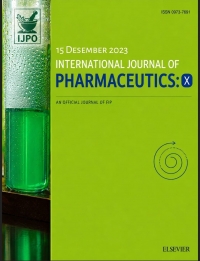 |
| File Attachment | LOADING LIST... |
| Availability | LOADING LIST... |
| Back To Previous |